Universiti Teknologi Malaysia (UTM), one of Asia’s leading public research universities in engineering and technology, has expanded its flexible education pathways to strengthen international access and support global collaboration in higher education. The initiative enhances UTM’s position as a regional provider of work-compatible, digitally driven postgraduate programmes, offering learners the flexibility to tailor their studies to professional and personal commitments.
UTM now offers a comprehensive range of flexible education pathways for international students through five key modes: Offshore Programmes, Open and Distance Learning (ODL), Transnational Education (TNE) via dual or double degree arrangements, Remote Supervision, and Accreditation of Prior Experiential Learning (APEL).
Offshore Programmes, branded as UTM PESISIR, offer structured learning through weekend and upcoming evening-based formats, enabling working professionals to pursue postgraduate qualifications without relocating and while maintaining full-time employment.
This underscores UTM’s commitment to flexible postgraduate programmes that blend professional experience with structured learning. Building on the flexibility in learning, the university’s fully online ODL initiatives provide an equally adaptable study experience. The ODL programmes are delivered 100% online, allowing students to complete their studies entirely remotely without the need for a student visa; only approval to study is required. This pathway provides maximum flexibility for learners who wish to pursue a UTM qualification while remaining in their home countries.
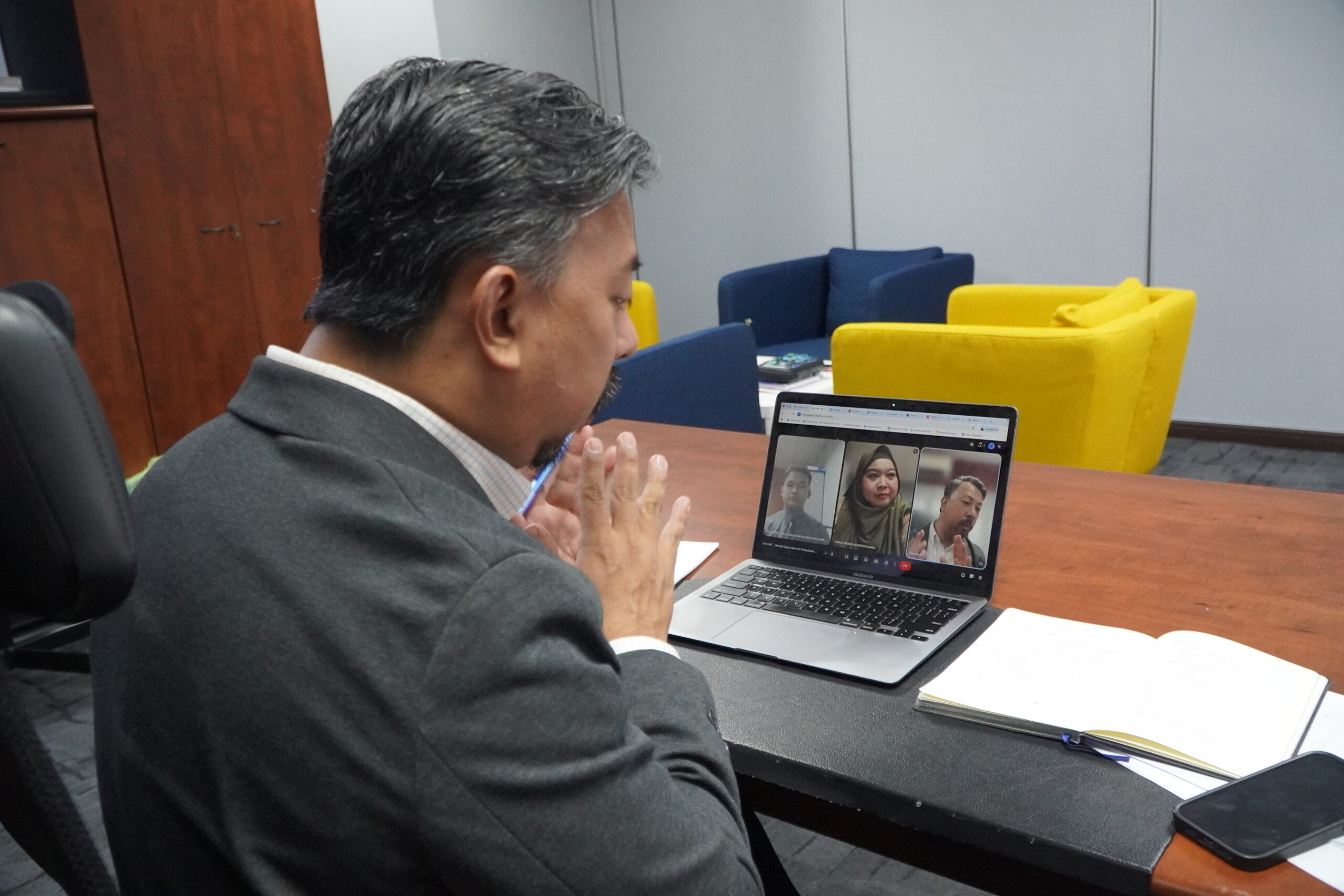
UTM’s fully online ODL programmes offer a highly flexible digital study experience, enabling students to access interactive materials, research supervision, and secure online assessments from anywhere in the world. This fully online approach allows students to balance professional, academic, and personal commitments without a geographical constraint. Complementing ODL, UTM’s Remote Supervision further enhances flexibility for postgraduate and research students by providing continuous virtual guidance, structured progress monitoring, and academic support regardless of location.
This flexible remote supervision approach is reinforced through long-standing international partnerships such as the UTM–East China Jiaotong University collaboration, where students benefit from hybrid learning experiences that integrate online and limited in-person engagement. Similarly, research scholars, including those from Indonesia’s Badan Riset dan Inovasi Nasional (BRIN), are able to complete their UTM postgraduate degrees remotely through virtual supervision and online research progress reporting, ensuring academic continuity without the need for physical relocation.
Extending this flexibility across borders, UTM’s Transnational Education (TNE) initiatives, including dual and double degree programmes, offer students adaptable multi-campus learning experiences alongside internationally recognised qualifications. Collaborations with Kyushu University, Yamaguchi University, Pusan National University and the University of Tsukuba provide rigorous academic training enriched by cross-cultural exposure, research collaboration, and global networking. Together, these flexible pathways equip graduates with the competencies and credentials needed to thrive in an increasingly interconnected world, preparing them to contribute effectively in global professional and academic environments
The dual degree, focusing on Master of Science (Mechanical Engineering) is designed with flexible scheduling to accommodate student’s professional commitments, enabling them to balance academic advancement with ongoing career responsibilities.
UTM also offers micro-credentials and stackable pathways that empower learners to gain in-demand, industry-aligned skills through focused and flexible learning modules. These short, specialised certifications can be progressively accumulated and stacked toward higher academic qualifications, creating seamless progression opportunities. This approach enables professionals to upskill, reskill, and remain competitive in today’s evolving industry landscape. Complementing these options, APEL provides experienced professionals with a flexible route into higher education by formally recognising prior experiential learning. Together, these pathways reflect UTM’s commitment to delivering accessible, work-compatible, and globally recognised education, tailored to support the diverse aspirations and schedules of today’s learners.
Through its comprehensive suite of flexible learning pathways including Offshore Programmes, fully online Open and Distance Learning (ODL), Transnational Education (dual and double degrees), Remote Supervision, micro-credentials, and UTM’s APEL demonstrates a steadfast commitment to making higher education accessible, adaptable, and globally relevant. These initiatives empower learners to advance academically while balancing professional and personal commitments, transform real-world experience into recognised qualifications, and gain international exposure and cross-cultural competencies. Together, UTM’s flexible education ecosystem positions the university as a leader in innovative, inclusive, and future-ready learning for students.